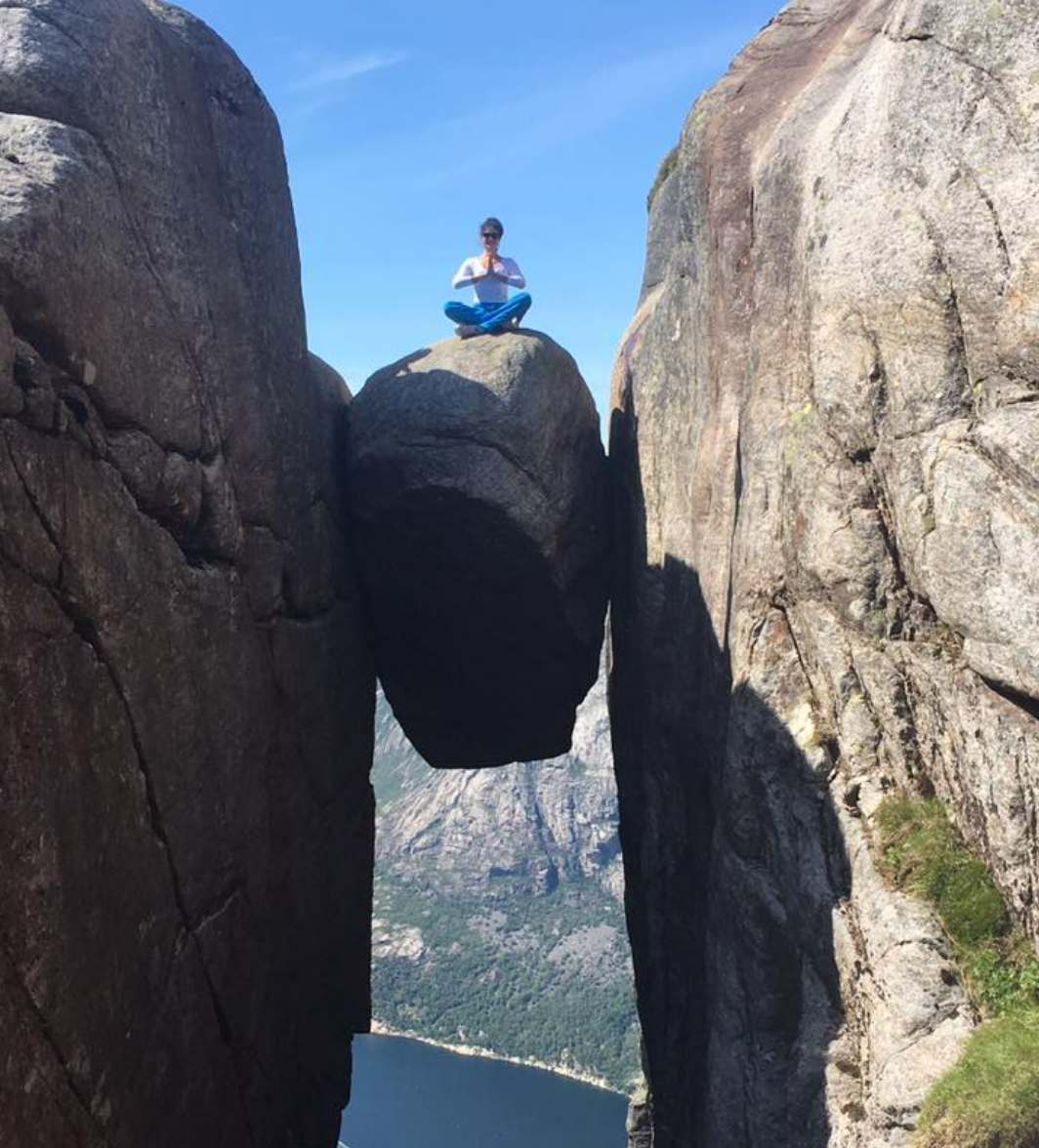
Photo : The Kjeragbolten Hike (FB : Pooja Batra, 2017)
The hike to Kjeragbolten is one of the most popular hikes in Norway. It is a challenging hike, but the views from the top are well worth the effort. The hike is about 12 kilometers long and takes about 6-8 hours to complete. There are two very steep sections, but the rest of the hike is relatively flat. The hike is best done in the summer months, when the weather is mild and the trails are dry.
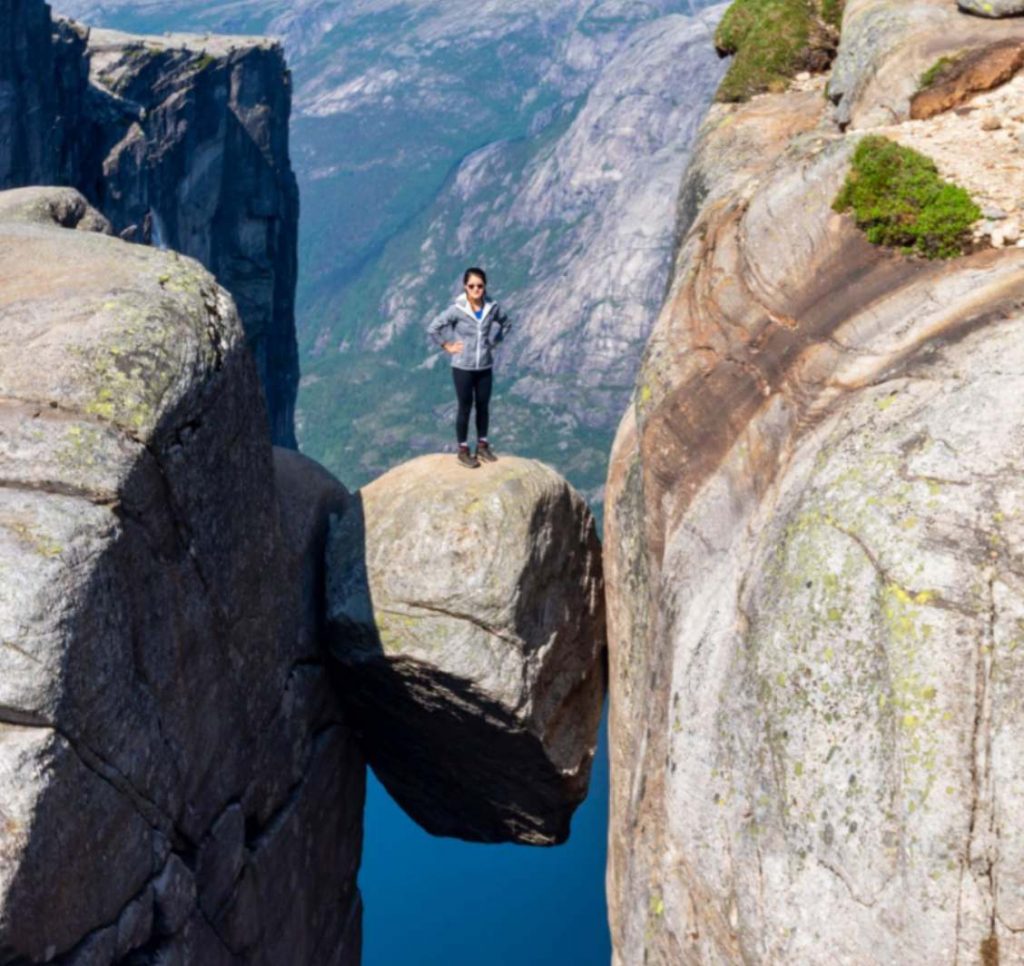
Kjeragbolten is a large boulder wedged between two cliffs, about 1000 feet above the floor of the Lysefjord. To reach the boulder, you must climb a steep section of rock and then cross a narrow ledge. The ledge is about 2 meters wide and has a drop of about 40 meters on either side.
Read : Krejagbolten: The Stone of Love That Unites Norway
Standing on Kjeragbolten is a surreal experience. The views from the top are incredible and you can see for miles in every direction. However, it is important to be aware of the danger and to take precautions. The boulder is slippery and the drop is significant.
If you are planning to hike to Kjeragbolten, be sure to wear appropriate footwear and clothing. You should also bring plenty of water and food. It is also important to be aware of the weather conditions and to avoid hiking in the rain or snow.
Here are some images of the Kjeragbolten hike:
Tips for hiking Kjeragbolten:
- Wear appropriate footwear and clothing.
- Bring plenty of water and food.
- Be aware of the weather conditions and avoid hiking in the rain or snow.
- Take precautions when standing on the boulder.
- Enjoy the views!
Source Citation:
- Kjeragbolten.com
- Visitnorway.com
- The Guardian
- The Telegraph
- National Geographic
Kjeragbolten.com is the official website of Kjeragbolten. The website provides information about the history, geology, and how to reach Kjeragbolten.
Visitnorway.com is the official tourism website of Norway. The website provides information about various tourist destinations in Norway, including Kjeragbolten.
The Guardian is a British newspaper that published an article about Kjeragbolten in 2017. The article discusses the history, geology, and dangers of Kjeragbolten.
The Telegraph is a British newspaper that published an article about Kjeragbolten in 2022. The article provides tips for hiking Kjeragbolten.
National Geographic is a travel magazine that published an article about Kjeragbolten in 2019. The article discusses the natural beauty of Kjeragbolten.
Quotations from the sources:
- Kjeragbolten.com: “Kjeragbolten is a large boulder wedged between two cliffs, about 1,000 feet above the floor of the Lysefjord. It is one of the most popular hiking destinations in Norway.”
- Visitnorway.com: “Kjeragbolten is a challenging hike, but the views from the top are well worth the effort.”
- The Guardian: “Kjeragbolten is a dangerous place, but it is also a beautiful one. If you are planning to hike to Kjeragbolten, be sure to take precautions.”
- The Telegraph: “Kjeragbolten is a must-see for any visitor to Norway. It is a challenging hike, but the views from the top are truly breathtaking.”
- National Geographic: “Kjeragbolten is a natural wonder that is sure to take your breath away.”